Ultimate Poland Travel Guide: Everything You Need to Know Before Your Trip
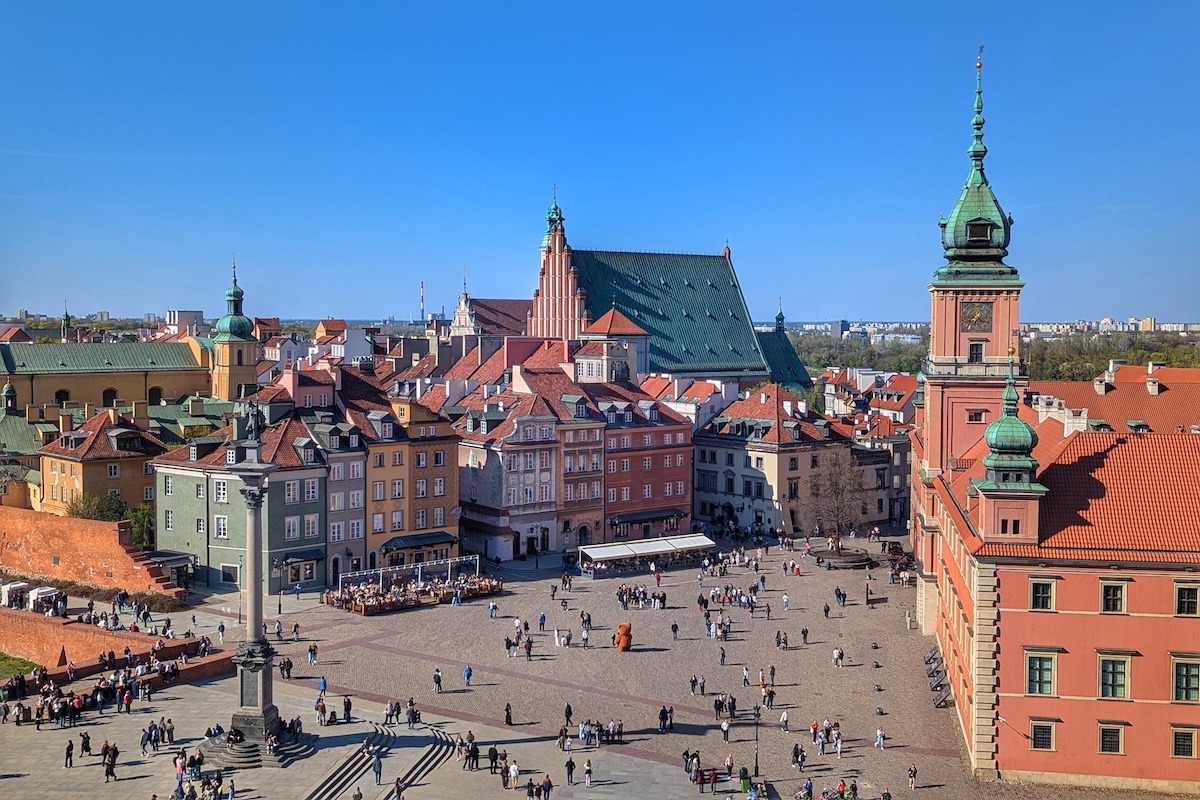
This Poland travel guide covers everything you need to know before visiting one of Europe’s most rewarding and underrated destinations. As a tour leader who lives in Poland, I get asked one question more than any other: why Poland? My answer is always the same. It offers the history, the architecture, the food and the warmth of Western Europe, but without the crowds, the queues, or the eye-watering prices.
For centuries Poland sat at the crossroads of Europe, and its history reflects that. This is a country that was once the largest in Europe, then vanished from the map entirely for 123 years, only to rise again. It has been fought over, partitioned, occupied and rebuilt, and yet Polish culture, faith and identity have never wavered. That resilience is written into every city square you’ll walk through.
But Poland isn’t just for history buffs. It’s a country of dense medieval old towns, sweeping Baltic beaches, mountain ranges, primeval forests, and a food and drink scene that will surprise anyone who thinks Central European cooking begins and ends with sausage. And with prices still a fraction of what you’ll pay further west, it’s one of the best value destinations on the continent.
This comprehensive Poland travel guide provides everything you need to understand Poland’s fascinating history, modern society, culture and cuisine, along with practical Poland travel tips. It isn’t exhaustive, but it’s the same overview I’d give my tour group on day one.
For more detailed guides on planning your adventure to Poland, check out my in-depth articles on Poland’s most exciting destinations:
- Warsaw Travel Guide (coming soon)
- Krakow Travel Guide (coming soon)
- Gdansk Travel Guide (coming soon)
Would you rather leave the planning to the experts? Then check out some of the options by Europe’s best value tour operator Expat Explore.
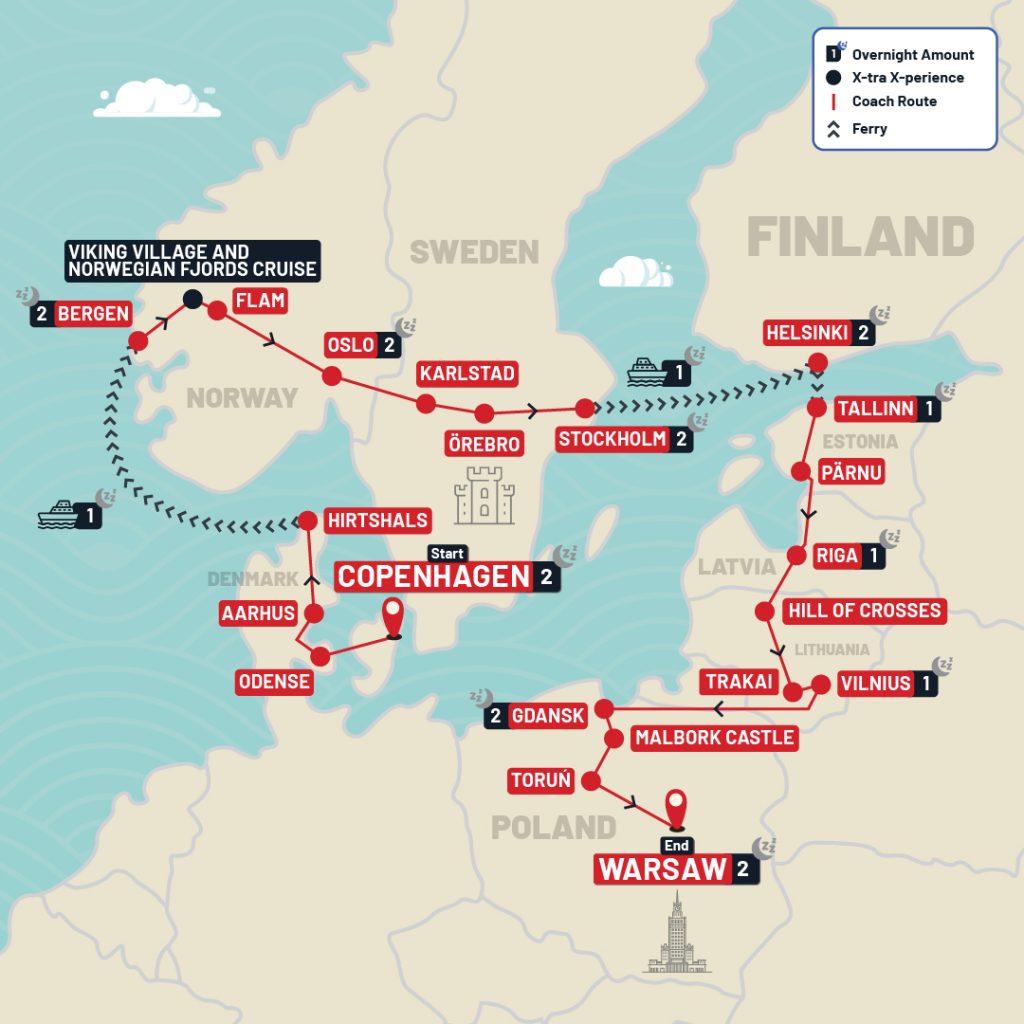
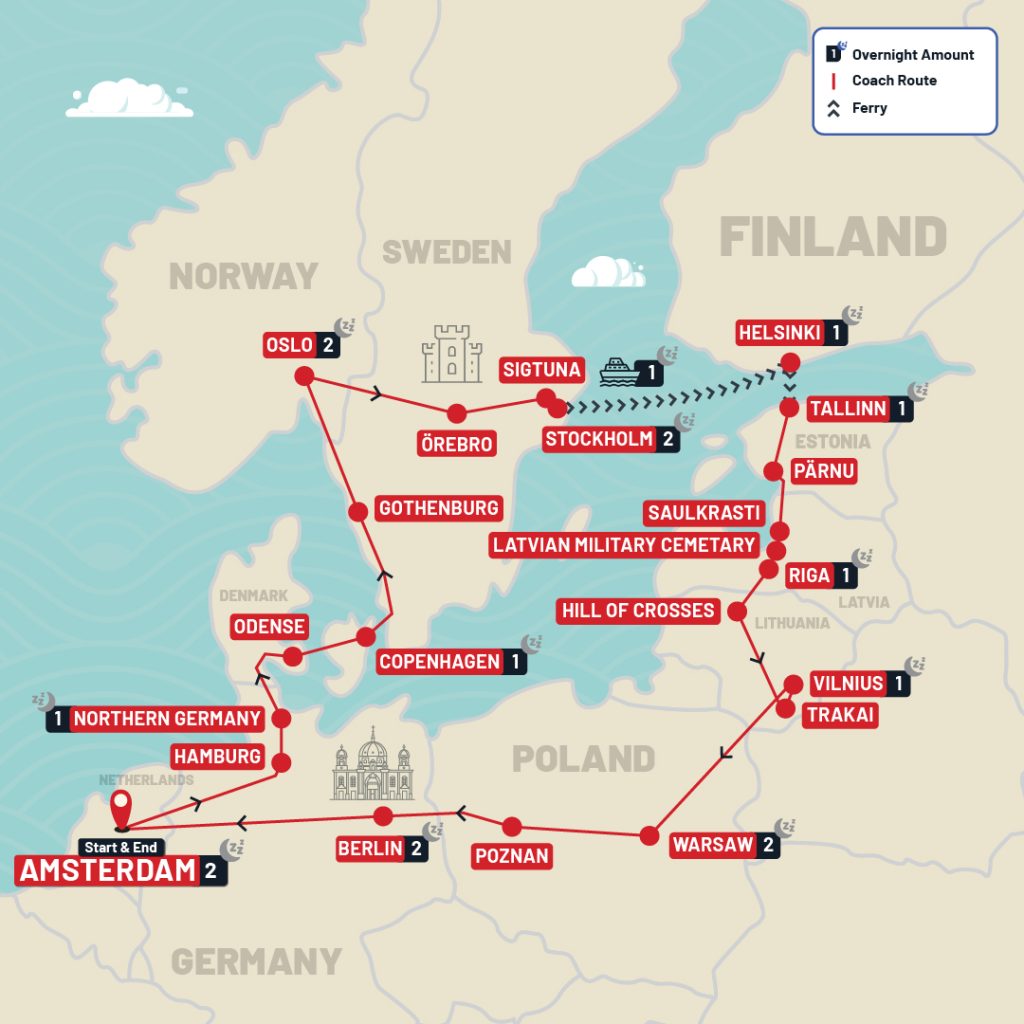
- Gdansk & Warsaw – Best of Scandinavia & the Baltics tour (20 days)/ Helsinki to Warsaw tour (10 days). Read my full review here.
- Krakow – Eastern Highlights tour (11 days).
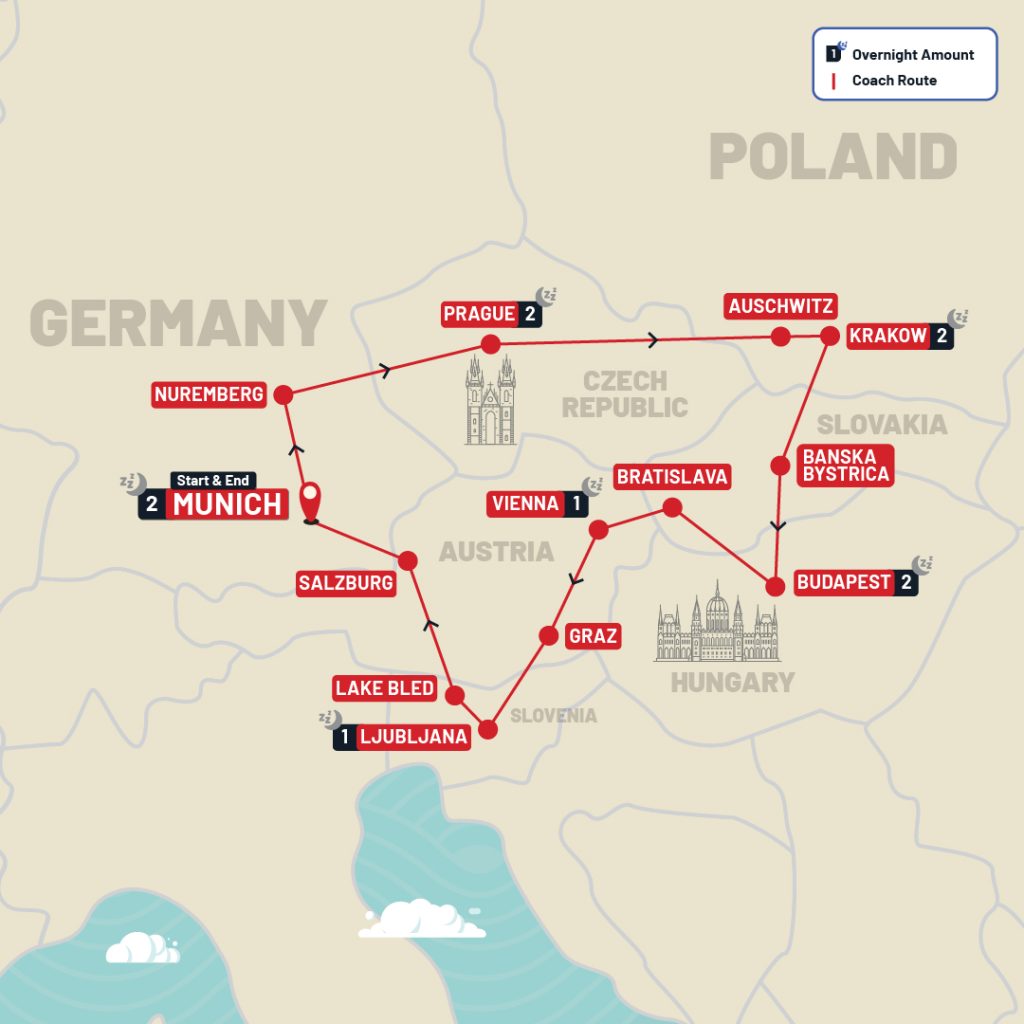
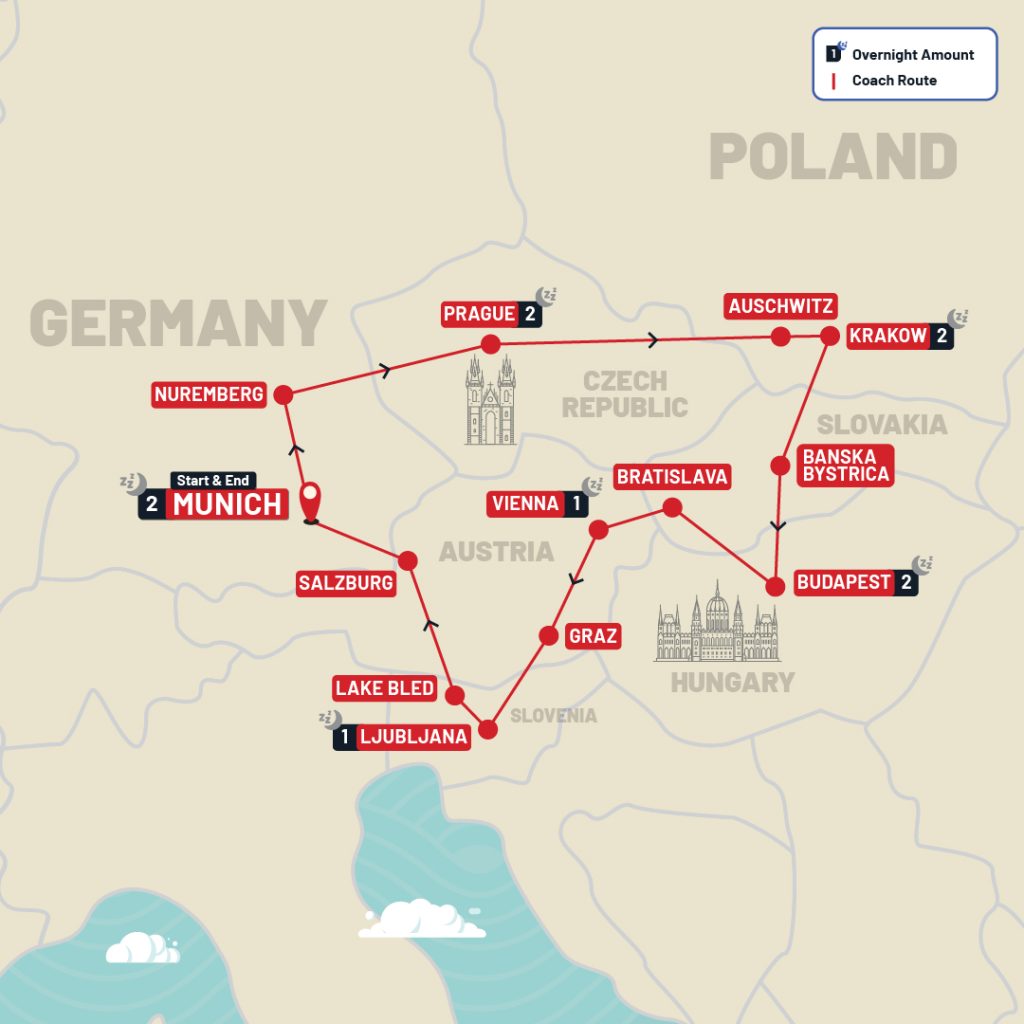
Use my exclusive promo code ‘TOURLEADERSJOURNAL‘ to save 5% on your booking! Click on the tour maps below for further information.
Poland Geography: Location and Landscape
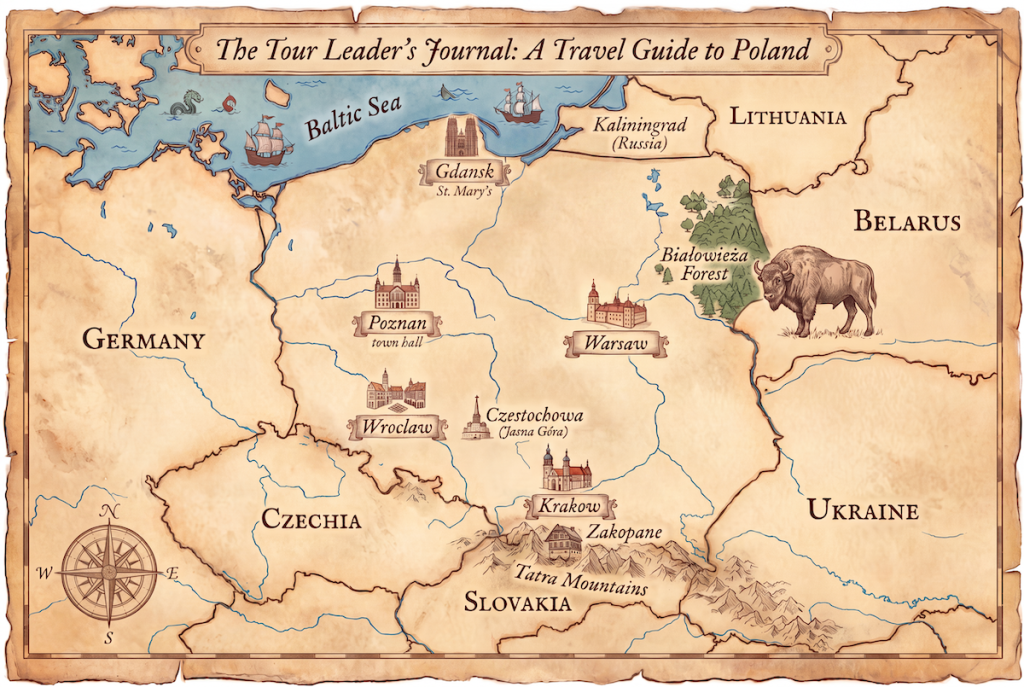
Poland sits right in the heart of Europe, bordered by no fewer than seven countries: Germany to the west, the Czech Republic and Slovakia to the south, Ukraine and Belarus to the east, and Lithuania and Russia (the Kaliningrad exclave) to the northeast. To the north lies the Baltic Sea.
Geographically, Poland is essentially one great unbroken plain, sweeping from the Baltic coast in the north down to the Carpathian and Sudeten mountain ranges along the southern border. In fact the name Poland derives from the Slavic word pole, meaning “field”, after an early Slavic tribe called the Polans who settled the region’s river basins. It’s a fitting name for a country this flat and this green, though the mountains in the south give skiers and hikers plenty to work with.
Around 38 million people live here, about 95% of them ethnic Poles, making it one of the more homogeneous countries in Europe, a legacy of the border changes and upheavals of the 20th century. The capital and largest city is Warsaw, though the historic royal capital of Krakow and the Baltic port of Gdansk are the other two cities you’re most likely to visit, and each has its own dedicated guide.
Brief History of Poland: A Thousand Years at the Crossroads of Europe
No Poland travel guide would be complete without its history, and Poland’s is one of the most dramatic in Europe. Understanding it is the key to understanding the country, so here’s the whistle-stop tour, the same one I give my groups.
The Birth of Poland (966)
Poland’s story begins with its first documented ruler, Duke Mieszko I of the Piast dynasty, in the 10th century. In 966 he converted to Christianity, and by that single act brought Poland into the community of Western Christian nations, a date Poles consider the birth of their country. The first coronation followed at Wawel Cathedral in Krakow in 1025, and the Kingdom of Poland began to take shape.
The Polish-Lithuanian Union
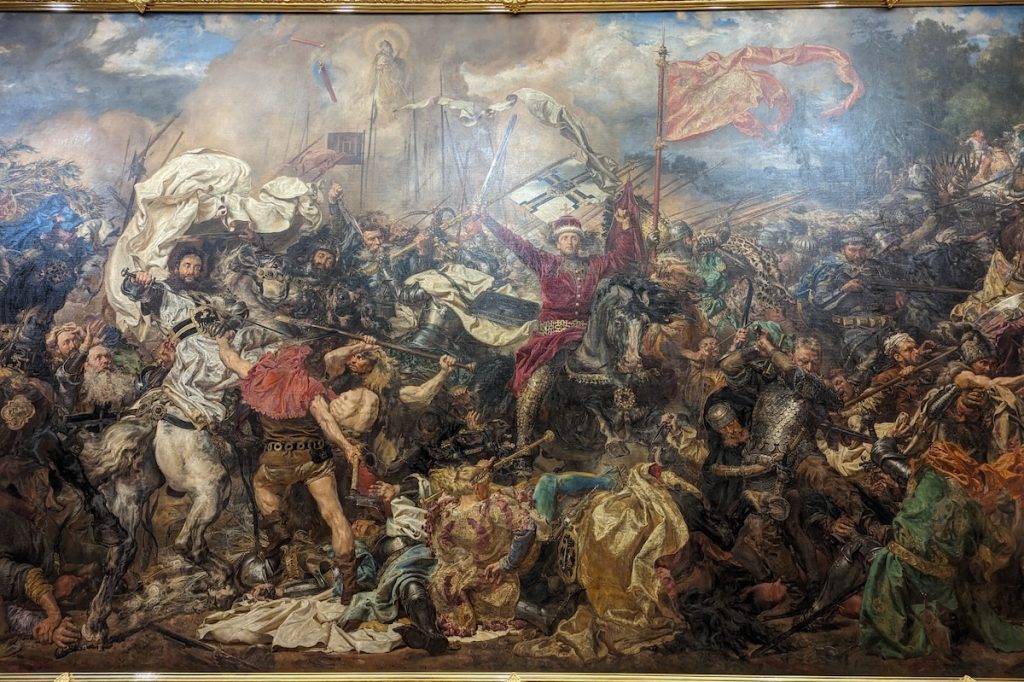
In 1385 Poland and neighbouring Lithuania formed a union that would last more than 400 years. It was cemented against a common enemy, the Teutonic Knights, a crusading military order who had turned their campaigns against the region. In 1410, at the Battle of Grunwald (Tannenberg), the combined Polish-Lithuanian forces annihilated the Teutonic Knights in one of the largest and most important battles of the medieval age. Keep this one in mind, because you’ll come face to face with the Teutonic Knights’ astonishing headquarters at Malbork Castle, and I cover them further in my Gdansk guide.
The Golden Age
The 16th century was Poland’s Golden Age. The Renaissance swept in, the arts and sciences flourished, and it was here that the Polish astronomer Nicolaus Copernicus (1473-1543) formulated the heliocentric theory, the radical idea that the Earth orbits the sun and not the other way around, effectively launching modern astronomy.
While the rest of Europe tore itself apart over religion, Poland did something remarkable, it declared a policy of religious tolerance, attracting Christians, Jews and Muslims fleeing persecution elsewhere. In 1569 the Union of Lublin formally created the Polish-Lithuanian Commonwealth, an enormous state of nearly a million square kilometres. Even more unusually, it was run as a “noble democracy” with elected kings, at a time when the rest of Europe was ruled by absolute monarchs. In 1683, the Polish king John III Sobieski led the allied armies that saved Vienna, and arguably Europe, from the advancing Ottoman Empire.
Poland Disappears from the Map
From the mid-17th century, the Commonwealth slid into decline, weakened by internal chaos and devastating invasions, including the catastrophic Swedish “Deluge”. Attempts at reform came too late. On 3rd May 1791, Poland adopted Europe’s first written constitution (and the world’s second, after the United States), but it wasn’t enough. The neighbouring powers of Russia, Prussia and Austria carved the country up between them, and in 1795 Poland vanished from the map of Europe entirely. For the next 123 years there was no independent Polish state. Let that sink in, an entire nation erased, yet the language, faith and identity survived underground.
Independence and Two World Wars
The end of World War I finally gave Poland its chance. On 11th November 1918, after 123 years, Poland reappeared on the map. The joy was short-lived. On 1st September 1939, Nazi Germany invaded Poland, igniting World War II, the very first shots fired at Westerplatte in Gdansk. Weeks later the Soviet Union invaded from the east, and the country was once again carved in two.
What followed was catastrophic. Poland formed the largest underground resistance movement in occupied Europe, the Home Army, and in 1944 the Warsaw Uprising became the single largest resistance effort of the entire war. The Nazis responded by razing Warsaw almost to the ground. By the war’s end, six million Polish citizens had perished, including three million Polish Jews, and the country lay in ruins.
Communism and Freedom
After the war, Poland fell under Soviet control as a communist satellite state. Hope arrived from an unexpected quarter in 1978, when the Krakow-born Karol Wojtyla became Pope John Paul II. Two years later the Solidarity movement was born in the Gdansk shipyards, the first independent trade union in the communist bloc. Led by electrician Lech Walesa, Solidarity would ultimately break the Soviet grip on Eastern Europe. In 1989 Poland held its first free elections, and a modern, democratic, capitalist Poland was reborn. The country joined NATO in 1999 and the European Union in 2004.
After a thousand years of turbulence, Poland has finally found stability, and it is thriving.
Polish Politics and Government
Modern Poland is a representative democracy with a president as head of state and a prime minister as head of government, under a constitution dating from 1997. The prime minister leads the Council of Ministers and holds the real governing power, while the president, elected by popular vote every five years, has a more limited role.
Poles are politically engaged and the country’s politics can be lively, but as a visitor none of this need concern you. Poland consistently ranks among the safer and more peaceful countries in the world, and it’s a member of the United Nations, NATO and the European Union.
Polish Economy: Europe’s Quiet Success Story
Here’s something that surprises a lot of visitors: Poland has one of the great economic success stories of modern Europe. Since joining the EU in 2004, the country has been transformed. The EU has poured tens of billions of euros into Polish infrastructure, new motorways, rebuilt railways, modern airports, and for well over a decade Poland has been one of the biggest construction sites on the continent.
Much of Germany’s export machine now runs through Poland. German companies manufacture here because they get skilled labour, high quality, a friendly business climate and proximity, sometimes cheaper than producing in Asia. It’s no exaggeration to say Poland has quietly become one of the engines of the European economy.
One practical point for travellers: Poland is in the EU but has not adopted the euro. The currency is the złoty (zł), which rather wonderfully translates as “golden”. It’s divided into 100 groszy. You’ll need to change money or withdraw złoty from an ATM, and I’d strongly recommend paying in złoty rather than euros wherever you’re given the choice, the exchange rate on offer for paying in euros is almost always terrible.
Tourism in Poland: Where to Go and What to See
Poland is one of Europe’s most underrated destinations, which is precisely its charm, and features 17 UNESCO World Heritage sites. You get the medieval old towns, the castles and the culture without the crushing crowds of Prague or the prices of Paris. Here’s where to point yourself.
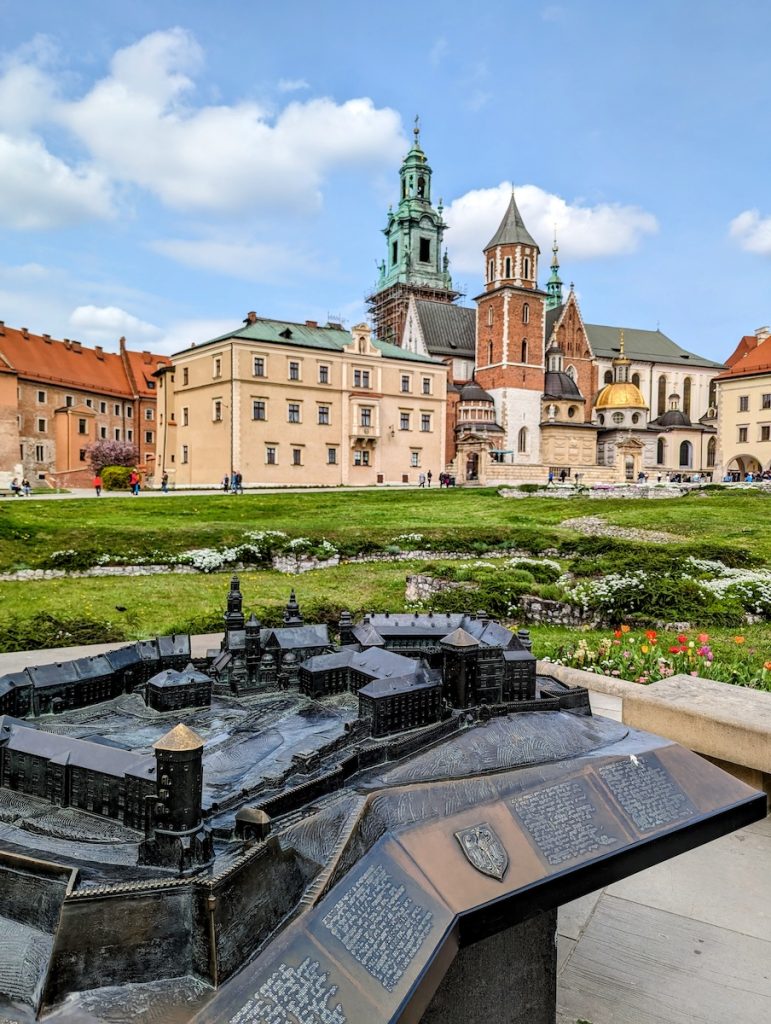
- Krakow: Poland’s former royal capital and its tourism crown jewel. A gloriously intact medieval old town (it survived the war largely undamaged), the vast Main Market Square, Wawel Castle, the historic Jewish quarter of Kazimierz, and the sombre but essential day trip to Auschwitz-Birkenau. My Krakow travel guide covers it all (coming soon).
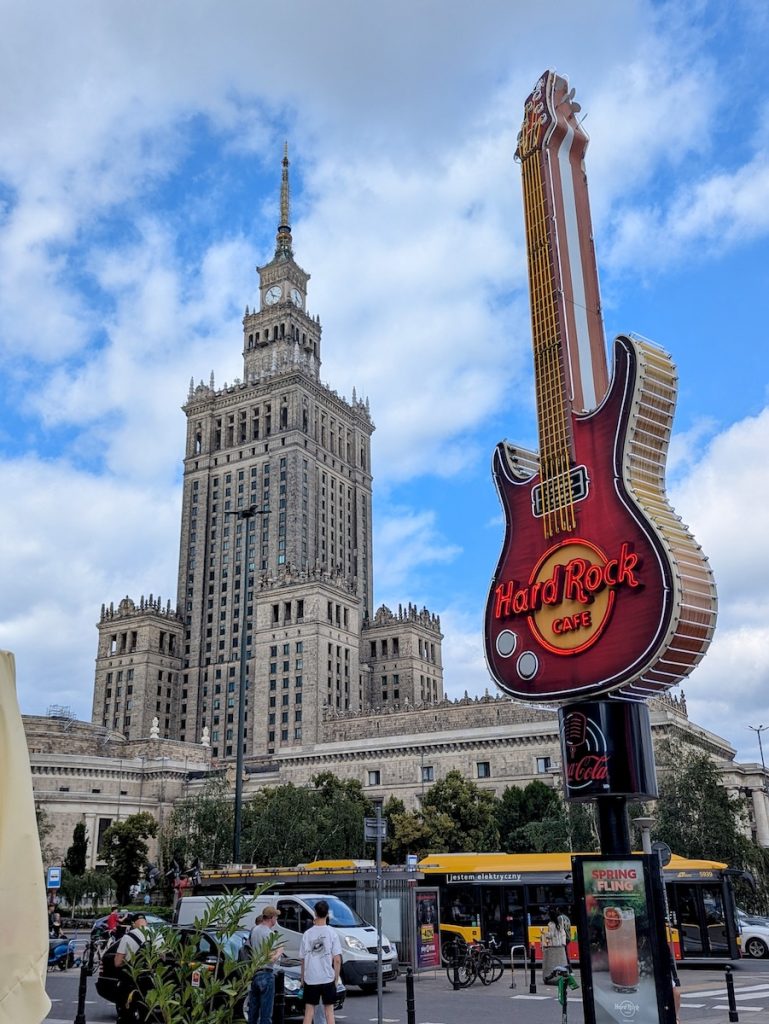
- Warsaw: The capital, and a masterclass in resilience. Its old town was rebuilt brick by brick from paintings and photographs after being flattened in the war, so faithfully that UNESCO lists the reconstruction itself. A dynamic, modern city with a moving history. See my Warsaw travel guide (coming soon).
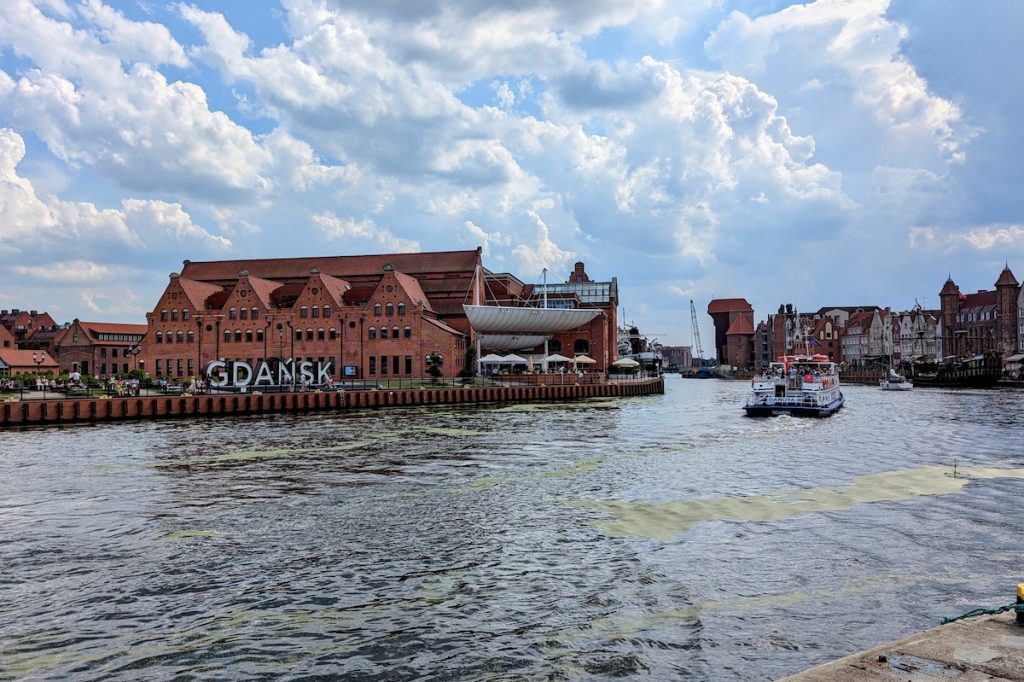
- Gdansk: The jewel of the Baltic coast, a stunning old Hanseatic port where the Second World War began and where Solidarity later brought down communism. Amber, waterfront townhouses, and the world’s largest brick castle nearby at Malbork. Full details in my Gdansk travel guide (coming soon).
- Wroclaw: A charming western city famous for its market square and the hundreds of little bronze gnome statues hidden around the streets.
- Zakopane and the Tatra Mountains: Poland’s winter sports and hiking capital in the south, where the plains finally give way to dramatic peaks.
- Bialowieza Forest: One of the last remaining fragments of the primeval forest that once covered Europe, and home to the continent’s largest population of wild European bison.
Planning a Central/Eastern European trip, or a wider tour of Northern Europe? Check out Expat Explore’s Eastern Highlights tour for Krakow or the Northern Explorer tour for Warsaw and Poznan.
- Expert local guides (like me!)
- All logistics handled (transport, hotels, itinerary)
- Hidden gems only locals know
Plus: use promo code TOURLEADERSJOURNAL for a 5% discount!
Poland Travel Guide: Culture, Food, and Traditions
Polish Food: Hearty, Comforting and Seriously Underrated
If you think Polish food is just heavy stodge, you’re in for a very pleasant surprise. Yes, it’s hearty, this is a country with cold winters and a farming heart, but it’s also comforting, generous and full of character. And it’s cheap. A proper sit-down Polish meal costs a fraction of what you’d pay in Western Europe.
The best introduction of all is the humble milk bar (bar mleczny), a relic of the communist era. These no-frills canteens were state-subsidised cafeterias serving cheap, home-style Polish food to workers, and many still survive, some still subsidised. The menu is a wall of Polish, the service is brisk, and the food is authentic and almost comically cheap. I send every one of my groups to a milk bar at least once.
Iconic Polish Dishes
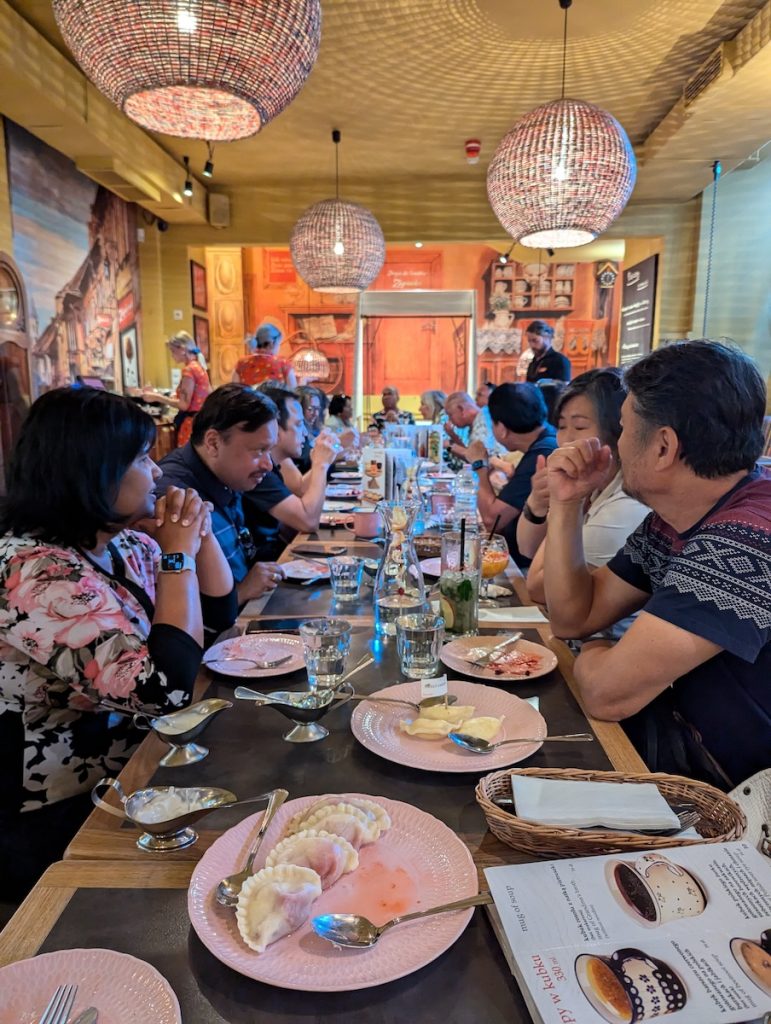
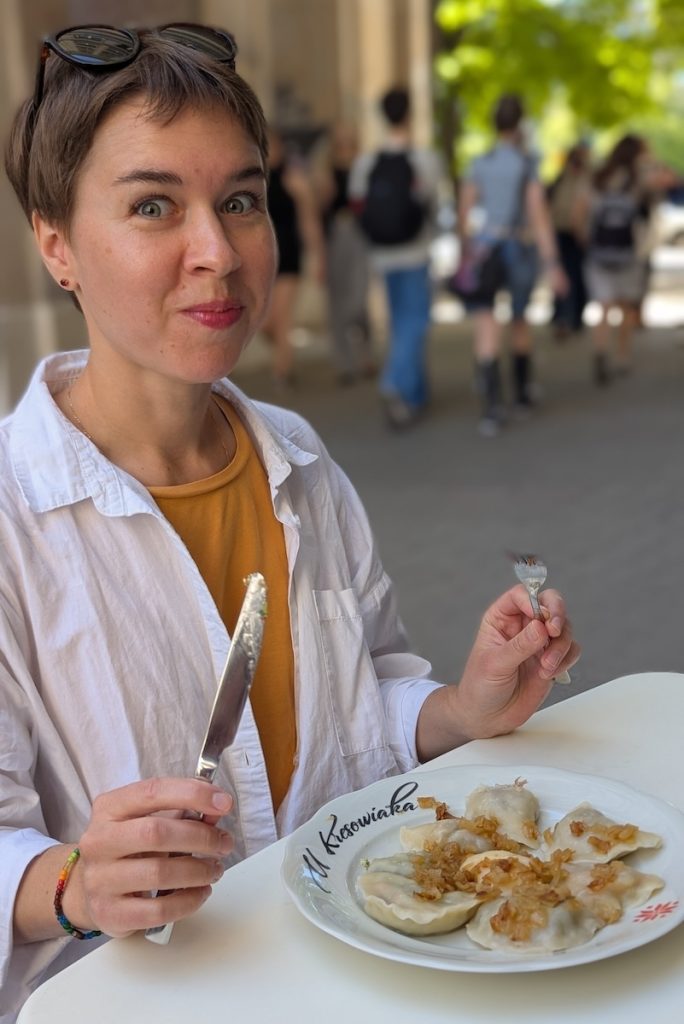
- Pierogi: The undisputed star of Polish cuisine. These dumplings come with an endless range of fillings, savoury classics like ruskie (potato and cottage cheese), minced meat, or sauerkraut and mushroom, and even sweet versions stuffed with fruit for dessert. There are entire restaurants, pierogarnie, dedicated to nothing else. Do not leave Poland without eating your body weight in these.
- Bigos (Hunter’s Stew): The national dish, a rich, slow-cooked stew of sauerkraut, fresh cabbage, and various meats. It’s the ultimate cold-weather comfort food and it tastes even better reheated the next day.
- Gołąbki: Cabbage leaves wrapped around a filling of minced pork and rice, usually served in a tomato or mushroom sauce. The name charmingly means “little pigeons”.
- Placki ziemniaczane: Crispy potato pancakes made from grated potato and onion, served either savoury with sour cream or, wonderfully, topped with sugar.
- Rosół: A clear, golden chicken broth that is the traditional Sunday starter in Polish homes, served after church.
- Zapiekanka: Poland’s favourite street food. An open-faced baguette loaded with mushrooms, cheese and toppings, then baked, essentially the Polish answer to pizza, and the perfect cheap late-night snack.
Polish Sweets and Desserts
- Pączki: Polish doughnuts, deep-fried until golden and filled with rose petal jam, custard, or chocolate, then dusted with icing sugar. Utterly addictive.
- Makowiec: A rolled poppy-seed cake, traditional at Christmas and Easter. Poppy seeds symbolise good fortune, so this one’s practically medicinal.
- Krówki: Poland’s beloved milk fudge, the name means “little cows”. Soft, sweet toffee-like sweets you’ll see sold everywhere.
- Ptasie mleczko: Literally “bird’s milk”, a soft, airy chocolate-covered milk mousse. Better than it sounds, I promise.
A note on bread Poles take bread seriously. Traditionally, if a piece of bread falls on the floor, it’s picked up and kissed as a mark of respect, and leftover bread is never simply thrown away. Poland’s dark rye breads are genuinely excellent, seek out a small local bakery and you won’t be disappointed.
Polish Drinks: Vodka, Beer and Bison Grass
Vodka (Wódka)
Let’s address the elephant in the room. Poland has been producing vodka for over 500 years and considers itself (much to Russia’s annoyance) the true home of the spirit. The word comes from woda, meaning “water”, and it was originally called okowita, from the Latin for “water of life”. Poles will tell you that vodka is what makes conversation flow and human connection easy, and that mixing good Polish vodka with anything is practically a crime, it’s meant to be drunk neat, chilled, and toasted with a hearty na zdrowie!
The one you must try is Żubrówka, or “bison grass vodka”, flavoured with a blade of grass from the Białowieża forest where Europe’s last wild bison roam. Each bottle even has a blade of the grass inside. For something special, look for Krupnik (honey and herb vodka) or the famous Goldwasser, a vodka with real flakes of gold floating in it.
Beer (Piwo)
Poles actually drink more beer than vodka these days, around 92 litres per person per year. The big traditional names are Żywiec (founded 1852, now owned by Heineken) and Okocim (founded 1845, now under Carlsberg), both crisp lagers of over 5% ABV. But Poland also has a thriving craft beer scene now, so seek out a multitap bar in any city and you’ll find dozens of local brews.
Mead (Miód pitny)
For something genuinely medieval, try mead, a honey wine dating back centuries, with an alcohol content between 14 and 19%. It can be dry or sweet, sometimes spiced or fruity, and it’s a lovely link back to old Poland.
Tea and Coffee
Poles are devoted tea drinkers, herbata is drunk throughout the day, usually black, weak, with sugar and a slice of lemon (rarely milk). On a cold day you might find it spiked with a shot of rum or vodka to warm you up. Coffee is equally beloved and taken strong. In Krakow especially, meeting for coffee in one of the city’s many kawiarnie is the great social occasion, some of the cafés are over a century old.
Religion in Poland: The Catholic Heartland
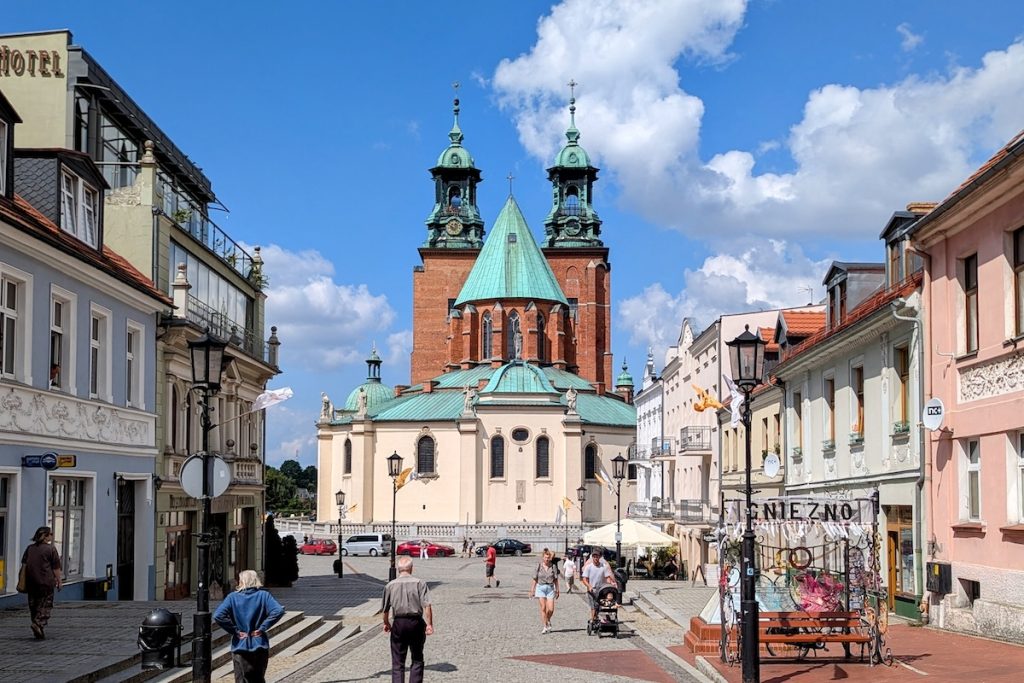
Poland is one of the most devoutly Roman Catholic countries in Europe, and the church is woven deep into national identity, precisely because it kept that identity alive through partitions, war and communism. Nothing symbolises this more than Pope John Paul II, the Krakow cardinal who became the first non-Italian pope in centuries in 1978 and played a pivotal role in the fall of communism. He remains a national hero, revered almost universally, and you’ll see his image and statues across the country.
You’ll encounter the deep faith everywhere, in the countless churches, the wayside shrines, and religious festivals. If you visit churches while travelling in Poland, dress respectfully, cover shoulders and knees, and remember these are active places of worship, not just tourist sights. Poland is also home to many revered “Black Madonna” icons, the most famous being Our Lady of Częstochowa, one of the country’s holiest treasures.
Sports in Poland
Football is the national obsession, with over 400,000 registered players. Poland co-hosted the UEFA European Championships in 2012 alongside Ukraine, building gleaming new stadiums for the occasion. The national team has had its moments on the world stage, and star striker Robert Lewandowski is a genuine national hero.
More unusual is speedway, motorcycle racing on dirt oval tracks, which is enormously popular here. The Polish Ekstraliga is considered the richest and most popular speedway league in the world, drawing riders from across the globe and posting some of the highest attendances of any sport in the country.
In winter sports, Poland has produced legends like the ski jumper Adam Małysz and cross-country skier Justyna Kowalczyk, and the mountain town of Zakopane is the winter sports capital.
Essential Polish Phrases for Travellers
Polish has a fearsome reputation for pronunciation, and honestly, it’s deserved (you’ll understand once you see a village called Szczebrzeszyn). English is widely spoken by younger Poles and in tourist areas, but locals genuinely appreciate any effort. Here are the basics:
- Hello – Cześć (informal, sounds like “cheshch”)
- Good day – Dzień dobry (formal)
- Goodbye – Do widzenia
- Please / You’re welcome – Proszę
- Thank you – Dziękuję (jen-KOO-yeh)
- Sorry / Excuse me – Przepraszam
- Yes / No – Tak / Nie
- Cheers – Na zdrowie! (the all-important one)
Poland Travel Tips: Need to Knows When Travelling to Poland
Poland is an easy and rewarding country to travel in, but here are a few things worth knowing before you go:
- Cash and cards: Poland uses the złoty, not the euro. Cards are widely accepted, even for small amounts, but carry some cash for milk bars, markets and rural areas. Always pay in złoty rather than euros if a card machine gives you the choice, paying in euros gives you a dreadful exchange rate.
- Tap water: Unlike some of its neighbours, Poland’s tap water is safe to drink throughout the country. No need to buy bottled.
- It’s very affordable: Poland remains one of Europe’s best value destinations. Meals, drinks, transport and accommodation are all noticeably cheaper than in Western Europe, though prices in central Krakow and Warsaw are creeping up.
- The weather has range: Poland has warm, pleasant summers and genuinely cold, snowy winters. If you’re visiting between November and March, pack for real cold. That said, Poland’s Christmas markets in December are magical.
- Air quality in winter: One downside worth knowing, Poland struggles with air pollution (smog) in winter, particularly in Krakow and the south, caused by coal heating. It’s usually only an issue on cold, still winter days, and needn’t put you off, but those with respiratory sensitivities should be aware.
- History is close to the surface: Poland endured unimaginable suffering in the 20th century, and sites like Auschwitz and the Warsaw Uprising museums are deeply moving. Approach them with the respect they deserve.
Ready to experience Poland for yourself? One of the easiest ways to see it, along with the best of Scandinavia and the Baltics, is on a guided group tour that handles all the logistics while you enjoy the experience.
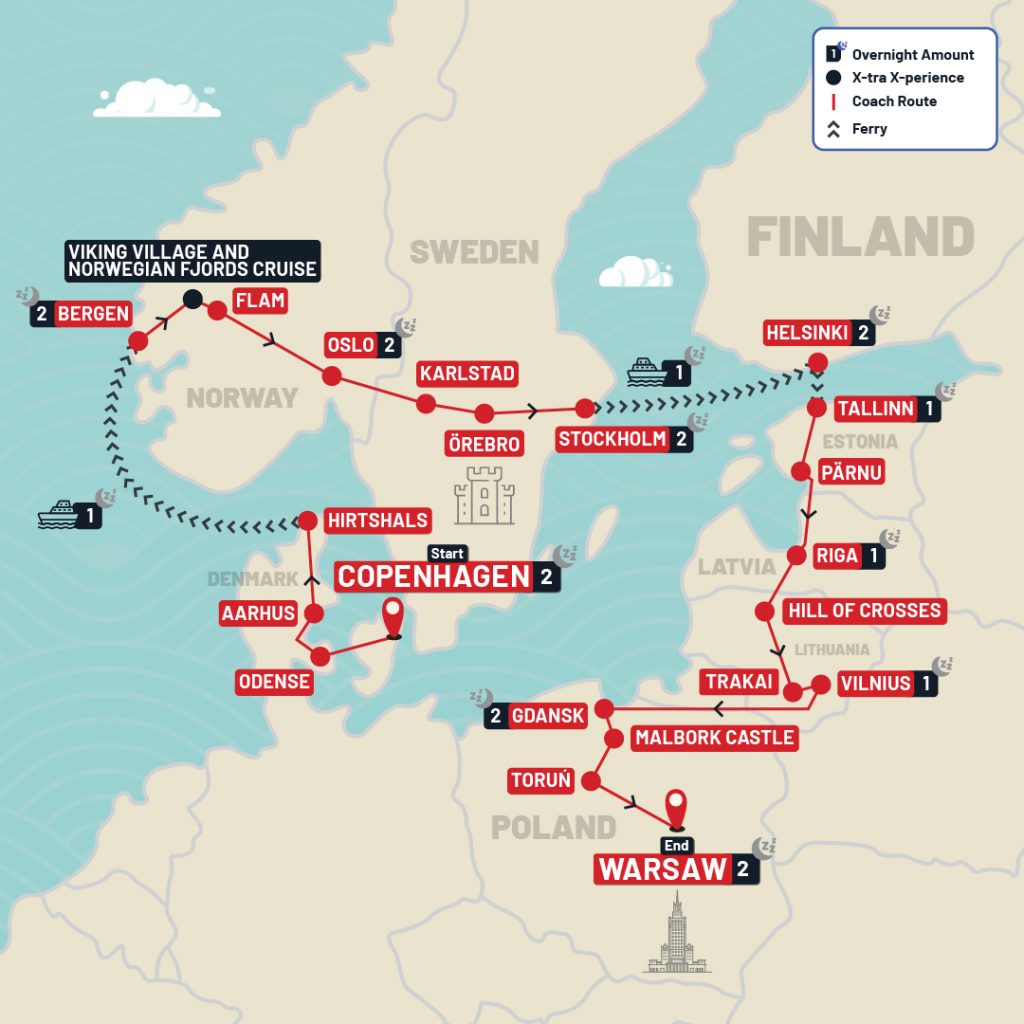
Poland features on Expat Explore’s Best of Scandinavia & the Baltics tour, which I’ve reviewed in full here.
Use my exclusive promo code
‘TOURLEADERSJOURNAL‘
to save 5% on your booking!
Frequently Asked Questions
Start Planning Your Polish Adventure
I hope this Poland travel guide has shown you why I love living in and travelling around this remarkable country. Poland is the great underrated gem of Europe, a place of extraordinary history and resilience, warm and generous people, hearty food, cheap and excellent beer and vodka, and some of the most beautiful old towns on the continent, all without the crowds and the cost of its western neighbours. Get here before everyone else figures it out.
Whether you’re wandering the medieval streets of Krakow, marvelling at rebuilt Warsaw, sipping a Baltic beer in Gdansk, or simply demolishing a plate of pierogi in a milk bar, Poland will win you over.
For more Poland travel guides, explore my detailed articles on Warsaw, Krakow, and Gdansk (coming soon).
Na zdrowie! (Cheers to your Polish adventure!)