7 Golden European Travel Tips: Essential Advice from a Tour Leader (10+ Years Experience)
After more than a decade leading group tours across Europe, I’ve seen the same mistakes made again and again — not because people are careless, but because no one ever explains how Europe really works. From cultural misunderstandings and weather frustrations to timing, crowds, and money mistakes, small missteps can have a big impact on your trip.
These European travel tips are the core rules I shared with my guests on day one of every tour. They’re not about rigid planning or rushing from place to place — they’re about mindset, awareness, and travelling smarter. Whether you’re visiting Europe for the first time or returning for another adventure, these seven golden rules will help you avoid unnecessary stress, save money, and enjoy Europe the way it’s meant to be experienced.
This isn’t an exhaustive list, and at times it’s a little tongue-in-cheek — but every rule comes from real experience on the road. Take what resonates, keep an open mind, and let Europe do the rest.
Rule 1: It’s Not Wrong, It’s Just Different (Understanding European Culture)
This was the first rule I learnt at the very beginning of my touring journey when I started with Contiki. Day 1 of tour, we need to deliver what we call a ‘first day talk’ where we explain how the tour is going to work and set the expectations so that things run as smoothly as possible. This rule was at the core of what we spoke about with the guests in terms of what to expect whilst on tour in Europe.
One of the great things about travel is that you learn about different societies and their customs and culture. However, if you go into a new country with a closed mind, these differences can lead to frustrations. It’s amazing how people allow petty things to upset them and tarnish their enjoyment of a destination.
An example would be getting water at restaurants. In Australia and the US, and many other countries, it is customary for restaurants to provide free table water. This is not the case in many parts of Europe, particularly in Germany. The idea being that restaurants are businesses and if you want a beverage then you buy one, water included.
But often guests would complain to me that a waiter refused to give them water and they tell me how rude they were. At which point I have to explain to them that this the norm in this society, and that it is somewhat unfair to then get angry with the waiter who was simply following their own societies norms.
I could write an entire blog post (actually, I will at some point) about the differences in European society, from paying to use the toilet, to a lack of air conditioning and ice in beverages. For now, remember, if you find yourself in a frustrating situation, tell yourself, “It’s not wrong, it’s just different.”
Rule 2: There’s No Such Thing as Bad Weather, Just Bad Clothing
Speaking of culture shocks, one of the biggest frustrations I had when I first moved to Europe was the weather. During my start-of-season orientation in June 2016, I was in London, and it was a cold and wet 11 degrees, yet it was the first day of summer. Curiously, I looked at the weather back home in Brisbane, a warm and sunny 28 degrees, first day of winter!
‘What have I done?!’ I thought to myself. It took me some time to adjust to this weather situation. I’d come from a climate where I mostly wore shorts and flip-flops (thongs as we call them in Australia). The norm in London was trousers (pants) and boots.
But whenever I looked out the window and saw blue skies I’d revert to my shorts and a light shirt, only for the weather to turn 2 hours later and I’m soaked while the locals looking me up and down wondering what I’m wearing. “Another dumb Australian” I could see them thinking?
When I moved to Munich, Germany, I came across the same problem. One moment it’s a beautiful day, the next it’s pouring down rain. Whilst I dressed more appropriately for the weather at this point, I’d still often complain when the weather did go bad. It was a German who told me, “There’s no such thing as bad weather, just bad clothing!”
Hard to argue with that when you’re caught in the rain without an umbrella. So take my German friends’ advice: pack and dress appropriately for the weather you’ll encounter, make sure you’re carrying a travel umbrella, raincoat, or poncho, and leave the flip-flops for the beach.
Rule 3: If You’re Early, You’re On Time; If You’re On Time, You’re Late; If You’re Late, You’re Gone
Another word of advice from the Germans has to do with your personal time management. The Germans are notoriously timely. So much so that this rule runs through their veins. Whilst I don’t always appreciate their strict nature when it comes to the rules, in terms of being reliable and turning up, the Germans are second to none.
Hence, when you travel, I highly recommend you act German when it comes to the time. You have places to be, things to see and do, trains, planes and buses to catch. Arrive early. If your museum entrance is at 11:00 am, then be there at 10:45 am. If you’re getting the local bus that departs at 1:00 pm, be there at 12:50 pm, you never know when the bus will arrive early, and you miss it even though you got there just in time.
Definitely never ever turn up late. When running coach tours, one of the biggest frustrations was people being late for the pickup time. I’m not sure what goes through their minds, thinking that it’s ok for them to make everybody else just wait for them. I would often get asked, “Have you ever left anyone behind?” My response being, “I’ve never left anyone behind, but some people have missed the bus!”
Rule 4: The Early Bird Gets the Worm
On the subject of time, the age-old saying “the early bird gets the worm,” is very applicable in the modern age of European travel. This rule, whilst initially sounding similar to the previous rule in terms of being early, applies to a different set of circumstances.
I’m sure you’ve seen the headlines about overcrowded tourist destinations. Locations such as Rome, Venice, Santorini and Amsterdam. There are plenty of photos circulating of these places rammed with tourists and articles are being written telling travellers to avoid going there at all, which is terrible advice. These destinations are busy for a reason. Because they are amazing! Why should you miss out on that?
The real answer comes down to planning your day. Get up and get going if you’re planning to head to a notoriously busy attraction and make sure you have pre-booked tickets in advance. Most people are in holiday mode, so they sleep in and don’t start their day until mid-morning. Only to arrive alongside the hordes of other tourists, as well as during the heat of the midday sun.
Then there’s the cruise ship passengers. Cruise ships arrive in the morning and then it takes them a bit of time to unload people and bus them to the attractions. What time they arrive depends on the stop, the Acropolis in Athens get hits with them at about 11:00 am, Oia in Santorini they start flooding in around 9:30 am. So if you can be there by 8:00 am, you’ll avoid the worst of the crowds and the heat of the day. Plus, an early start gives you the perfect excuse for an afternoon siesta!
Rule 5: Go When You Can, Not When You Need To
In 2018, I was working as a bike tour guide in Munich for Mike’s Bike Tours. One day I had a school group from America, after the introduction in Marienplatz we headed around to the bike shop. Before loading up on bike’s we sent them off to the Hofbrauhaus, not for a beer, but to use the bathroom. At this point one of teacher’s shouted out to the students “Go when you can, not when you need to!”
I had a little laugh to myself. You see, when managing a large group of people, one of your biggest tasks is giving them the opportunity to use the bathroom. During the training trip I did with Contiki, whenever we went to a stop, we had to do a ‘recce.’ Find the important information at that stop, such a restaurants, pharmacies, cash machines, attractions and most importantly, toilets.
When I became a tour guide, I thought the biggest challenge would be learning all the history of Europe and conveying it in an interesting way to my guests. But here I was, having given up a successful career in Policing to run around Europe with a clipboard writing down the locations of its toilets. And guess what? Clean public toilets don’t just pop up out of nowhere when you need them. So when you get the opportunity, go!
Rule 6: Don’t Have Valuables on You and You Won’t Get Pickpocketed
Ok, on a more serious note. A real problem in Europe is the pickpockets. There are desperate people getting around, and they know that tourists have money and valuables. You are a target. I used to think I was invincible, that they wouldn’t go after a 6’5″ man, then 2 years ago I had my little man bag stolen whilst sitting in a cafe in Stockholm. Both my Australian and British Passports gone, as well as a significant amount of cash I was carrying for the tour. My heart sank when I realised.
Over the years, I’ve had many guests also fall victim to the pickpockets. When someone tells you that they’ve just had €500 stolen, you really feel for them. That money is gone, and there’s nothing they can do. Of all the things that could go wrong on a tour, this is the main thing you want to avoid happening to your guests.
So, a few years ago, I came up with this rule. I remembered an old staff sergeant from my Army days who would tell us, “If you don’t pull the trigger, you won’t have a UD (unauthorised discharge)!” Sound advice. Using this military tone with my guests to re-inforce the notion that they should be careful with their property I changed it to “Don’t have valuables on you, and you won’t get pickpocketed!”
Simply put, don’t carry around large amounts of cash, leave your passport securely stored away in the hotel where possible and don’t go around wearing expensive items of jewellery. This way even if you do get pickpocketed, they haven’t taken anything valuable.
Rule 7: YOLO—You Only Live Once
Whilst it’s important to save yourself from losing money unnecessarily, it’s also important that you do go out and enjoy yourself and not be scared to spend that money. Travel has become more expensive over the last few years, and budget travel has become a popular topic.
Whilst there are certainly smart ways to save money on your travels such as booking early, travelling off season, and taking advantage of sales events. But don’t fall into the trap of watching every penny once you arrive.
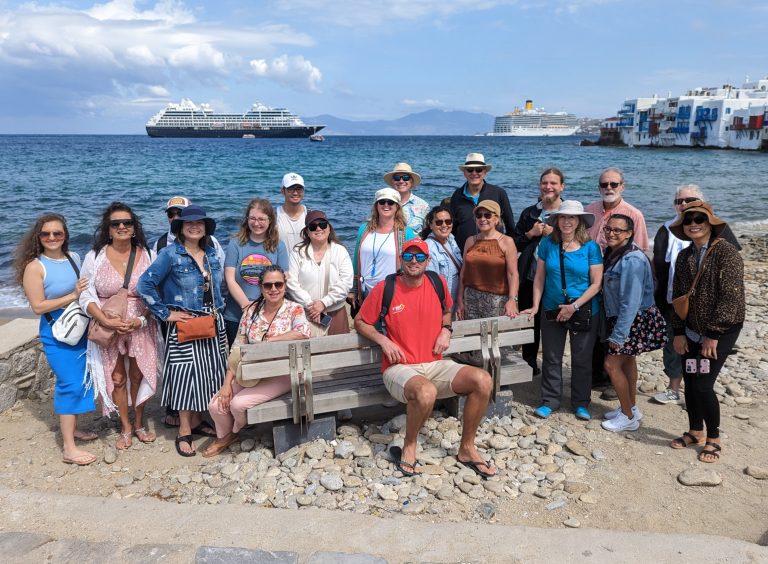
I remember one afternoon when I was with a group in Mykonos. I took them to Rhapsody bar, this lovely cocktail bar right on the waters edge in Little Venice with a balcony looking over the bay to the famous windmills. People were mesmerised by the view and started ordering cocktails to savour the moment. One of the guests, however, opened up the cocktail menu, saw the prices and then closed it. Apparently, the cocktails were too expensive (about €15), so he just ordered an overpriced beer instead.
Imagine spending all that money on flights, the tour and insurance, then arriving at the destination and being too cheap to buy a cocktail. I’m not saying go and throw your money away but at the same time, live a little. Live in the moment, enjoy life, we only get one shot at this so do it right the first time, if you find yourself wondering if something is worth the price but you know you want it, just say YOLO.
Go have that nice dinner and bottle of wine with your partner in Paris, take the expensive cable car to the top of the mountain in Switzerland, buy that leather bag you liked in Florence, and definitely enjoy a few cocktails in Mykonos.
Your Journey Awaits
If there’s one final European travel tip I can leave you with, it’s this: travel young, travel often, and don’t wait for the “perfect” moment. Europe is vast, diverse, and endlessly rewarding — but it teaches its best lessons to those who show up curious, flexible, and willing to adapt.
Ten years ago, I walked away from a secure career to chase the dream of travelling and guiding others across the world. At the time, people told me I was making a mistake. Now, they tell me I’m living the life they wish they’d had the courage to pursue. The truth is, every confident traveler you see once stood exactly where you are now — deciding whether to take that first step.
If you’re feeling inspired and ready to start planning your own European adventure, the next step is choosing how you want to travel. I’ve written a detailed post on the benefits of group travel, explaining why it can be one of the smartest, safest, and most rewarding ways to explore Europe — especially for first-timers or those short on planning time.
Start somewhere. Start now. Pack light, keep an open mind, and let the journey teach you everything else.