The Complete Meteora Travel Guide: Monasteries in the Sky
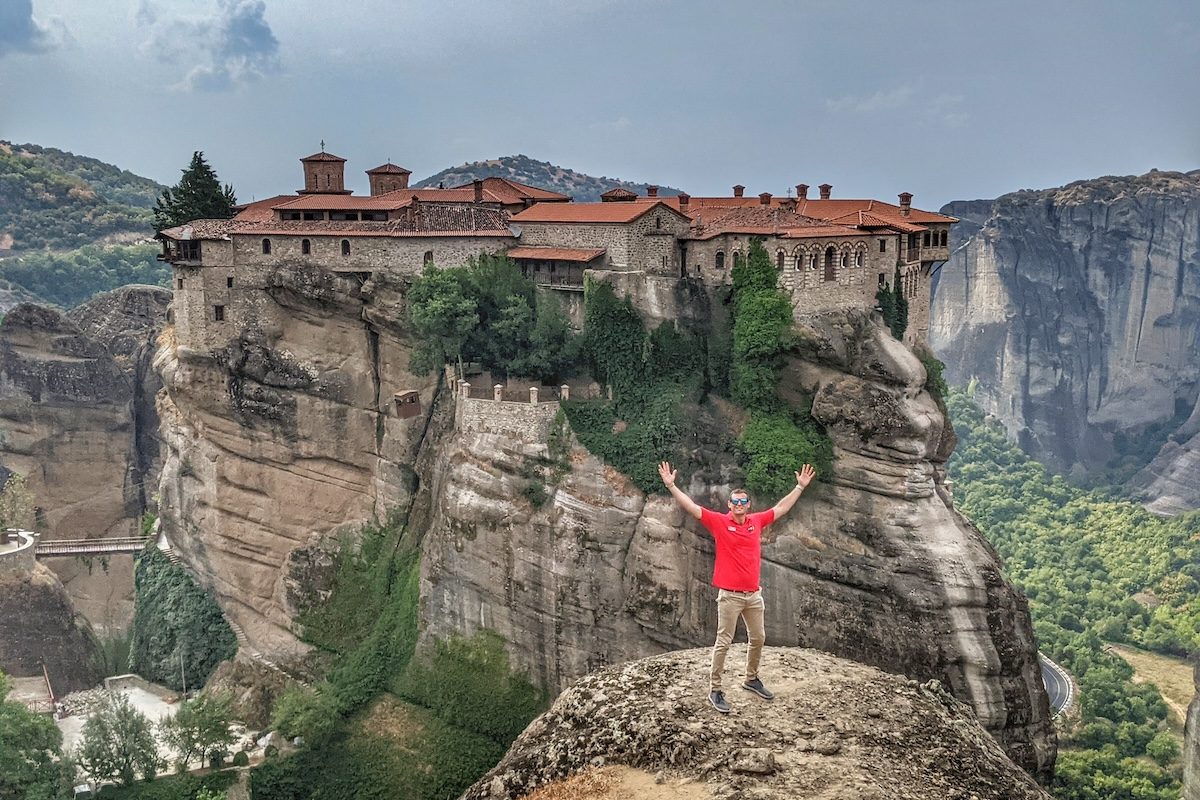
The first time I heard about Meteora was from a guest on tour with me in Asia. Chris, an Australian, answered my usual icebreaker question—”Where’s the one place in the world you can’t wait to visit?”—with a single word: ‘Meteora.’
I’d led dozens of tours through the Greek islands, but was completely oblivious to the wonders of mainland Greece. When I looked up photos of Meteora, I was stunned—ancient monasteries perched impossibly on top of towering rock pillars, appearing to float in the sky.
In 2019, I finally got my chance to visit with Expat Explore on my first mainland Greece tour. I fell in love instantly. I’ve now visited Meteora nearly 20 times, and seeing guests’ eyes light up as we drive up that mountain road never gets old.
This Meteora travel guide covers everything you need to know about visiting these breathtaking “monasteries in the sky”—from their fascinating history to practical visiting tips and the best places to stay in Kalambaka. Whether you’re exploring on your own or joining a group tour of Greece, this guide will help you make the most of your visit.
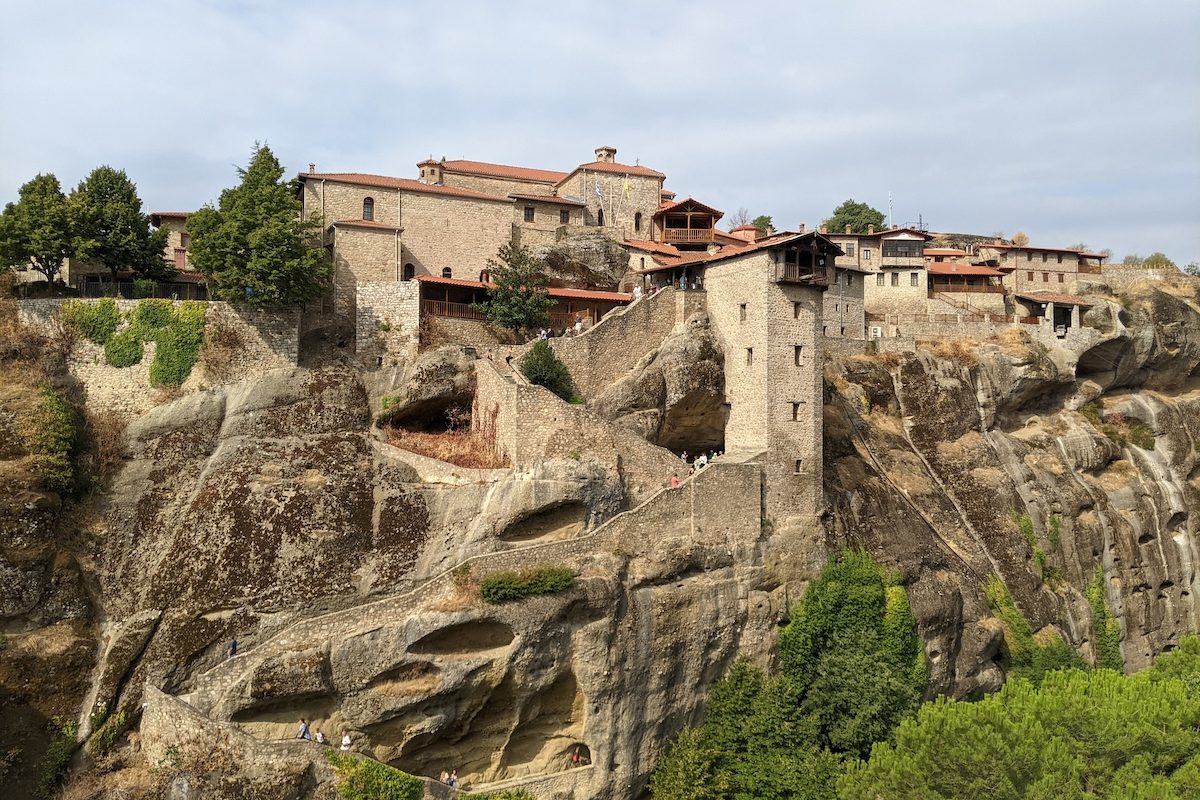
Meteora History: How the Rock Formations Were Created
Let’s kick this Meteora travel guide off with a look at the two explanations for how Meteora’s otherworldly rock formations came to exist. I’ll share both, and you can decide which one you believe.
The Scientific Explanation
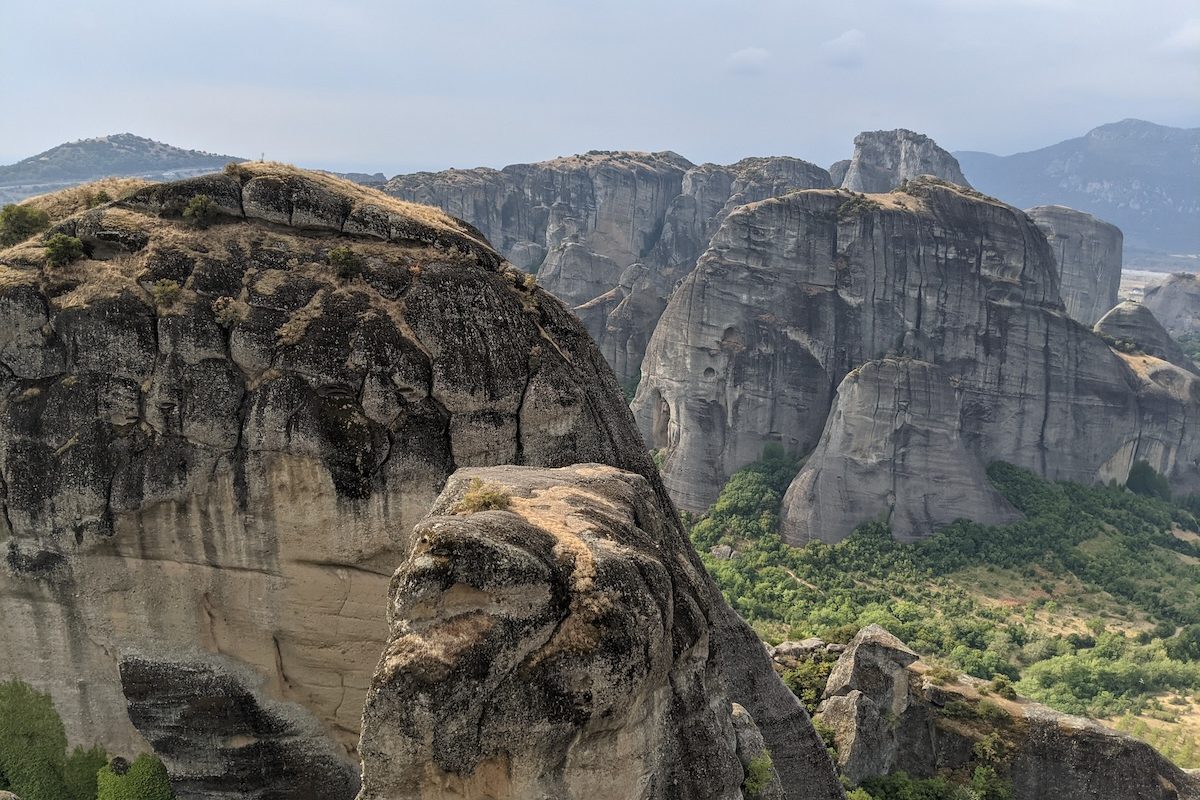
Geologists believe these towering rocks were once a river delta where the river met the sea. Millions of years ago, the seabed dropped and eventually disappeared entirely. Over millennia, rain and wind erosion sculpted the rocks into their present dramatic forms—some reaching heights of over 400 meters (1,300 feet).
The Mythological Version
According to Greek mythology, during the war between the Gods and the Titans, Zeus made a deal with the Hecatonchires—giant monsters with 100 arms and hands. These creatures joined Zeus’s side and clawed at the earth, hurling massive boulders at the Titans. The long vertical striations in the rocks? Those were supposedly carved by the Hecatonchires’ fingernails as they dragged earth upward.
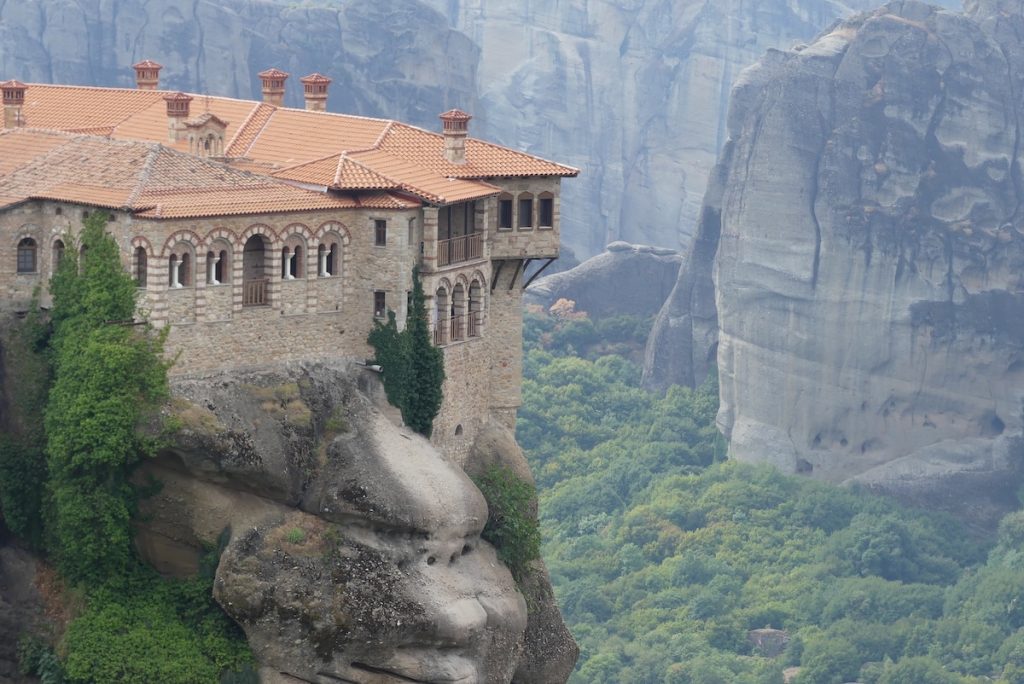
Whichever version you believe, there’s no denying the rock formations are spectacular. But what truly makes Meteora extraordinary are the monasteries perched atop these narrow cliffs, appearing suspended in mid-air. In fact, “Meteora” literally means “suspended in the air” or “in the heavens” in Greek.
The Story of Meteora’s Monasteries
Human habitation in the Meteora area dates back tens of thousands of years, but the monasteries’ construction is more recent—beginning about 1,000 years ago.
As the Byzantine Empire shrank with the rise of Islam in the Near East, some people escaped to these mountains to devote their lives to faith. They became hermits, living in small caves carved into the mountainsides and practicing an ascetic lifestyle. As more arrived, they began meeting for communal prayers on Sundays before returning to their solitude.
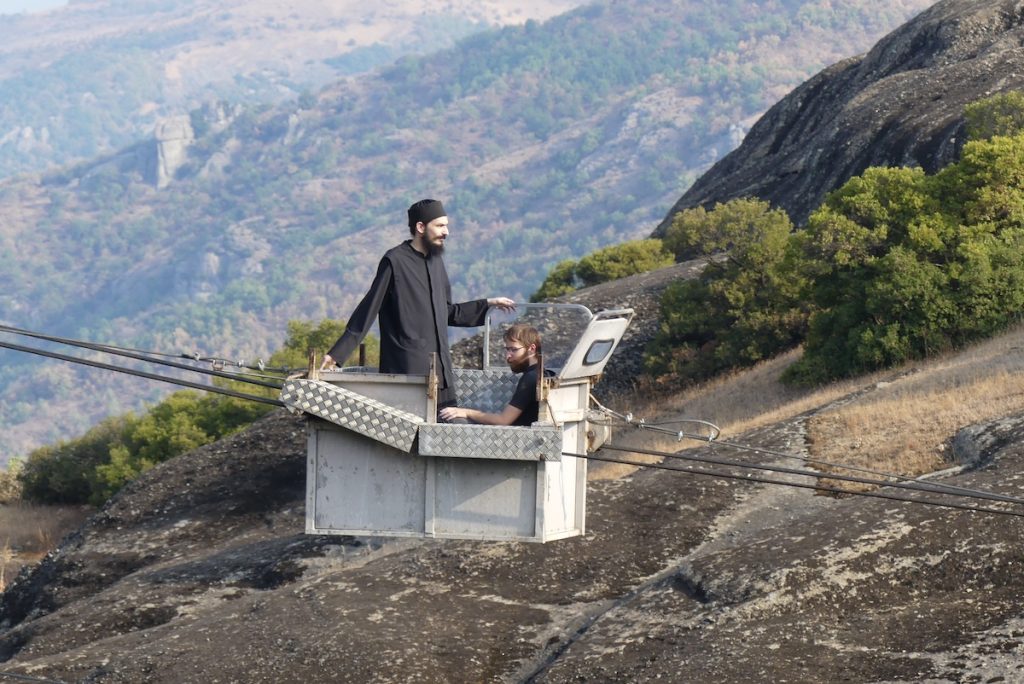
Eventually, these hermits decided to scale to the very tops of the rock pillars using long makeshift ladders—to get as close to God as possible. Using ropes and nets, they hauled up construction materials to build small chapels for prayer. Since climbing up and down was so difficult, these chapels evolved into full monasteries with living quarters, kitchens, and larger churches.
At their peak, there were 20 monasteries perched atop Meteora’s cliffs. Unfortunately, during World War II, the area suffered under Nazi invasion. Many monasteries were bombed and destroyed. With fewer people choosing monastic life, other monasteries were abandoned and fell into ruin.
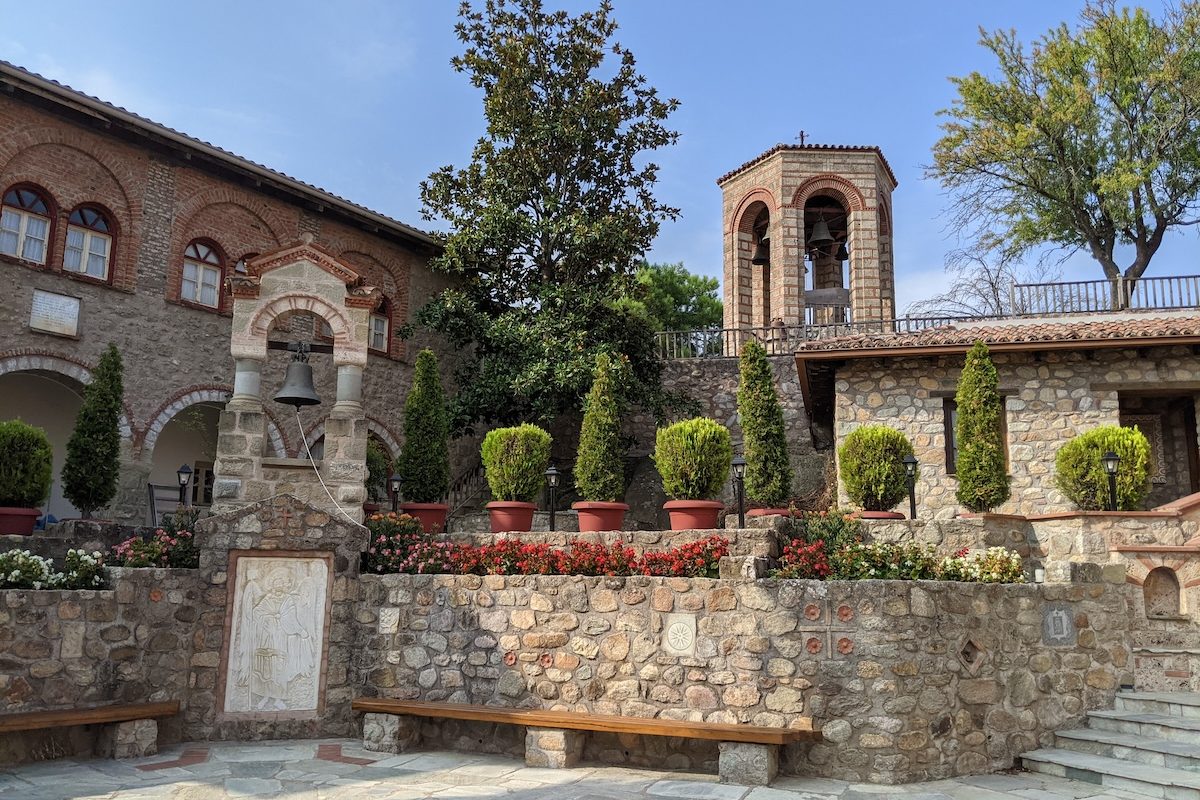
Today, only six complexes remain active—four monasteries and two nunneries. All six are UNESCO World Heritage Sites and remain functioning religious communities while also welcoming visitors.
The 6 Meteora Monasteries You Can Visit
Each of Meteora’s six monasteries offers a unique experience. Here’s what makes each one special:
Great Meteoron (Megalo Meteoro)
The first and largest monastery, founded in the 14th century. Features include a stunning observation deck with panoramic views, a beautifully frescoed church, a small museum displaying religious artifacts, and the preserved old kitchens where you can see how monks lived centuries ago.
Varlaam Monastery
My personal favourite. You’ll recognise this monastery from artwork showing the famous long rope hanging down to pull up monks and supplies. Don’t miss the fantastic terrace viewing platform, the intricately decorated church, the remarkable icon collection, the ancient wine barrel, and most impressively—the original 16th-century wooden winch system used to haul everything up the cliff.
Holy Trinity (Agia Triada)
Featured in the James Bond film ‘For Your Eyes Only’ with Roger Moore—you might remember the dramatic scene of 007 scaling the cliffs to infiltrate the monastery. The views from here are spectacular, and it’s one of the most photographed monasteries, though it requires climbing 140 steps to reach.
St. Stephen’s Monastery (Agios Stefanos)
The most accessible monastery in Meteora—no stair climbing required! You simply cross a small pedestrian bridge to enter. This makes it ideal for visitors with mobility concerns or those traveling with young children. Now a nunnery, it features beautiful gardens and stunning valley views.
Roussanou Monastery
The second nunnery and one of the smaller complexes, but also one of the easiest to access with fewer stairs than others. While there’s less to explore inside compared to larger monasteries, it tends to be less crowded, offering a more peaceful experience. The exterior photo opportunities here are stunning.
St. Nicholas Anapafsas
The monastery with the lowest elevation, making it the easiest to reach if you’re walking from Kalambaka town. It’s smaller and receives fewer visitors, but features beautiful 16th-century frescoes by the renowned Cretan painter Theophanis Strelitzas.
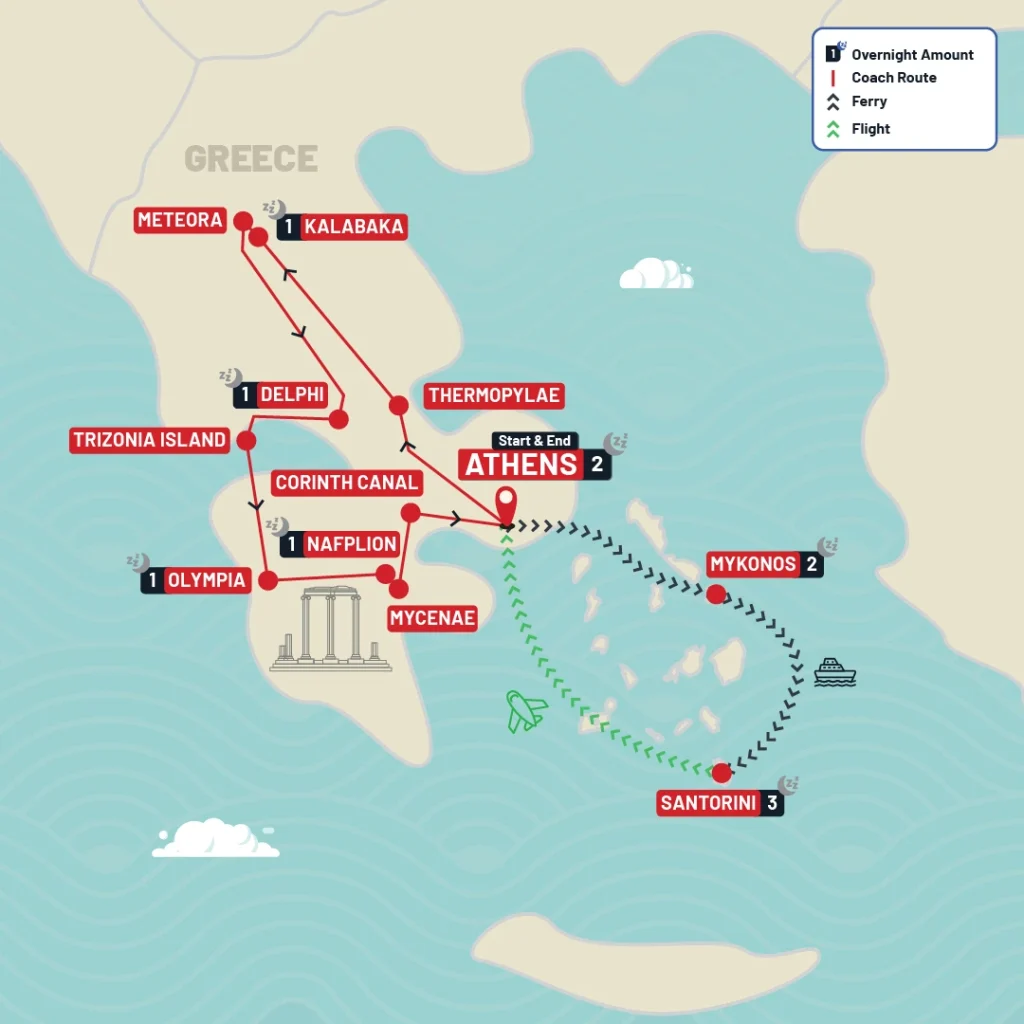
Ready to explore Greece without the planning stress?
I’ve partnered with Expat Explore to offer you an incredible Greece tour experience.
Use my exclusive promo code ‘TOURLEADERSJOURNAL‘
to save 5% on your booking!
How to Visit Meteora: Your Complete Transportation Guide
The monasteries sit high on Meteora’s cliffs, but there’s no accommodation up there unless you’re a monk! As a visitor, you’ll stay in the town of Kalambaka, located immediately below the mountain range. Here’s how to get up to the monasteries:
By Organized Group Tour (Easiest Option)
If you’re visiting Meteora on an organised group tour, seeing the monasteries will be included in your itinerary. This is the most stress-free option—transportation, timing, and monastery selection are all handled for you. Learn more about the benefits of group travel and how to book the best tour.
By Rental Car
If you have a rental car, you can drive up the winding mountain road yourself. The road is well-maintained but narrow with hairpin turns. Park along the roadside near each monastery—there are no formal parking lots. Tip: Arrive early (before 9 AM) as parking spots fill quickly, and late arrivals may face a long walk along the road.
Local Tour by Minibus
Several local tour operators in Kalambaka offer half-day and full-day minibus tours. Your guide provides commentary on the drive up and drops you at each monastery entrance. Check if they offer guided tours inside the monasteries if you want in-depth historical insight, or if they simply provide transportation.
E-Bike Tour (For Active Travelers)
For the more active traveler, e-bike tours offer a fantastic middle ground—you get a workout without being exhausted. Local operators provide electric bikes and guide you up the mountain roads, sharing information about the monasteries before giving you time to explore independently. The electric assist makes the climb manageable even if you’re not a regular cyclist.
Hiking (For the Very Active)
If you’re feeling particularly energetic, you can hike up to the monasteries. While you could walk along the road, two scenic hiking paths wind through the vegetation and offer stunning views. Some sections are quite steep, but fit hikers can reach the first monasteries in about an hour. This option is best in cooler months (April-May or September-October) as summer heat makes it grueling.
Kalambaka: Your Base for Visiting Meteora
Kalambaka, your base for exploring Meteora, is essentially one main street—Trikalon Street—with a few side streets branching off. Everything you need is along this main road, and you can walk from end to end in about 15 minutes. Despite its small size, Kalambaka offers excellent restaurants, cafes, and accommodation options, as featured in this Meteora travel guide.
Where to Eat in Kalambaka
For a look into Greek food culture, check out my complete Greece travel guide. In terms of where to eat in Kalambaka, here are a few reliable recommendations:
- Taverna Taksimi – For your authentic Greek taverna experience, head to Taksimi located in central Dimoula Square. Traditional dishes like moussaka, pastitsio, and grilled meats are prepared just like grandma makes them. The outdoor seating offers people-watching opportunities in the heart of Kalambaka.
- Ambrosia Restaurant – A modern restaurant serving meaty Greek classics with a contemporary twist. Excellent for steaks, lamb chops, and grilled meats. The atmosphere is upscale but prices remain reasonable.
- MyGyros – There are several gyros and souvlaki shops along Trikalon Street. I’ve tried them all in my mission to find the best, and MyGyros wins hands down. They offer all the usual suspects—chicken, pork, and sometimes even lamb gyros. Perfect for a quick, budget-friendly meal after monastery exploring.
- Loukoumania – For your Greek doughnut fix, Loukoumania serves the best loukoumades in Kalambaka. These fried dough balls come drizzled with honey and various toppings. The perfect sweet treat after dinner or an afternoon pick-me-up.
Where to Drink in Kalambaka
- Feel the Rocks – An upmarket rooftop bar with stunning views of the Meteora cliffs. The cocktails are pricier than typical Greek bars, but the ambiance and sunset views make it worth every euro. Reserve a table at sunset for the best experience.
Where to Stay in Kalambaka
- Divani Meteora Hotel (4-Star) – The best hotel in town, located at the start of Kalambaka’s main street for easy access to restaurants and shops. Features include a lovely pool area, spacious rooms with modern amenities, balconies with monastery views, and excellent breakfast. Worth the splurge if your budget allows.
- Hotel Kaikas (3-Star) – For more budget-friendly accommodation without sacrificing location or cleanliness, Hotel Kaikas delivers. The rooms are comfortable and spotless, staff is helpful, and you’re still centrally located on the main street. Great value for money.
- Meteora Central Hostel – Budget travellers and backpackers should head to Meteora Central Hostel. Clean dorms and private rooms, a social common area perfect for meeting other travellers, and a prime central location. The hostel also organises group activities and can help arrange tours. For more tips on getting the best price for your accommodations, check my booking guide.
Nearby Attractions Beyond the Monasteries
- Sunset at Meteora – It’s not just the Monasteries that draw people to Meteora. The landscape itself is breathtaking and is even more spectacular at sunset. If you don’t have your own vehicle, there are local operators also running sunset tours.
- Holy Church of the Dormition – Kalambaka has its own impressive church right in town. The Byzantine-era Church of the Dormition features beautiful frescoes and intricate marble details. It’s free to enter and worth a quick visit before or after your monastery tour.
- Theopetra Cave – A lesser-known but absolutely fascinating attraction near Meteora. Archaeologists discovered evidence of Neanderthal habitation dating back 60,000 years. More importantly, a wall built at the cave entrance 25,000 years ago is believed to be the oldest known human-made structure in the world! The cave recently reopened after a five-year restoration. If you have extra time in the area, this is well worth a visit for history enthusiasts.
Essential Tips Before You Visit Meteora
- Dress Code (Very Important!) – The monasteries remain active religious sites with a strict dress code for all visitors. This is not just a guideline—you will be turned away if improperly dressed.
- Women must wear skirts or dresses that cover the knees—pants are not permitted. Most monasteries provide wrap-around skirts at the entrance if you arrive unprepared, but it’s better to dress appropriately from the start.
- Men must wear long trousers (shorts are not allowed). Shoulders must be covered for everyone.
- Opening Hours and Closure Days – Each monastery has specific opening hours and closes one day per week, with different monasteries closing on different days. This rotating schedule ensures at least several monasteries are open every day. Always check current schedules before your visit—hours can change seasonally. Generally, monasteries open around 9 AM and close by 3-5 PM depending on the season.
- Entry Fees – All monasteries charge a small entrance fee (typically €3-5 per monastery), payable in cash at the entrance. While some visitors question charging admission to religious sites, these fees fund crucial maintenance and preservation work. The monasteries are UNESCO World Heritage Sites requiring constant upkeep to preserve them for future generations.
- Best Time to Visit – The best times to visit Meteora are spring (April-May) and autumn (September-October). The weather is pleasant, crowds are smaller than in summer, and you’ll avoid the intense heat that makes monastery climbing exhausting. Winter (November-February) sees fewer tourists, but some monasteries have reduced hours, and the weather can be cold and rainy. Summer (June-August) is peak season—expect crowds and heat, but guaranteed good weather. For more on timing your Greece trip, see my complete guide.
- How Many Monasteries to Visit – Most visitors see 2-3 monasteries in a half-day visit, which is plenty to appreciate Meteora’s uniqueness without feeling rushed or exhausted from all the stair climbing. If you have a full day, visiting 4-5 monasteries is achievable. Trying to see all six in one day leaves you little time inside each and results in monastery fatigue. My recommendation: Visit Great Meteoron (the largest), Varlaam (the most interesting interior), and one other based on accessibility needs.
Ready to explore Greece without the planning stress?
I’ve partnered with Expat Explore to offer you an incredible Greece tour experience.
Use my exclusive promo code ‘TOURLEADERSJOURNAL‘
to save 5% on your booking!
Not sure if group tours are right for you? Read my honest Expat Explore review from a former tour leader’s perspective.
Q1: How many days do you need in Meteora?
A: Most visitors spend 1-2 days in Meteora. A half-day tour allows you to see 2-3 monasteries, while a full day lets you explore 4-5 monasteries at a relaxed pace. If you’re interested in hiking or visiting nearby attractions like Theopetra Cave, consider staying 2 days.
Q2: What is the dress code for Meteora monasteries?
A: Women must wear skirts or dresses that cover the knees (pants not permitted), and men must wear long trousers (no shorts). Shoulders must be covered for everyone. Most monasteries provide wrap-around skirts if you arrive unprepared, but it’s better to dress appropriately from the start.
Q3: How much does it cost to visit Meteora?
A: Each monastery charges €3-5 entrance fee (cash only). If you visit 3 monasteries, expect to pay €9-15 total. Transportation varies: local tours cost €20-40, e-bike tours €40-60, while driving yourself only costs gas and parking is free (but limited).
Q4: Can you visit Meteora monasteries on your own?
A: Yes, you can visit Meteora independently by rental car, local tour, e-bike, or hiking. However, an organized tour removes planning stress and ensures you don’t miss important details. Tours typically include transportation, skip-the-line access, and expert guides who bring the history to life.
Q5: Which Meteora monastery is best to visit?
A: Great Meteoron (the largest) and Varlaam (most interesting interior with the famous winch system) are the top two. For easy access, St. Stephen’s requires no stair climbing. If you only have time for one, I recommend Varlaam for the best combination of history, artifacts, and views.
Final Thoughts: Don’t Miss Meteora on Your Greece Trip
However you choose to travel, make sure Meteora is on your Greece itinerary. Greece offers so much more than just islands, and it’s a shame when travellers visit Mykonos and Santorini thinking they’ve “done Greece.”
Don’t get me wrong—I love those islands (I’ve written detailed guides on both!). But returning to Greece again and again, delving deeper into what mainland Greece offers, will reward you with epic memories that go beyond beach clubs and sunset photos.
The Meteora monasteries represent something truly unique in the world—a place where human determination, faith, and architectural ingenuity combined to create something that seems impossible. Standing beneath those towering rocks, looking up at ancient monasteries perched hundreds of meters above, you’ll understand why this place has captivated travellers for centuries.
Make sure you put Meteora at the very top of your Greek adventure list. Trust me—after nearly 20 visits, I still get goosebumps driving up that mountain road. Your first glimpse of the monasteries will be a moment you’ll never forget.
Thanks for reading my Meteora travel guide. Safe travels, and enjoy the magic of Meteora!